


Aircon Isolator Switch

An aircon isolator switch is a component in residential and commercial air conditioning systems. It provides safety and control for air conditioner installations. In Singapore, where air conditioning is crucial for maintaining indoor comfort, understanding the purpose, diagnosis, and replacement of an aircon isolator switch is vital for homeowners and technicians alike.

EXPLORE OUR SERVICES
Click to find out
What Is the Estimated Cost of Replacing an Isolator Switch
To change an isolator, it typically costs around $100. Extra charges will apply, depending on the routing of the wires. There are additional charges associated with pulling the wiring from the DB box for HDB flats as well as pulling the wiring (that connects the isolator to the DB box) if the wires are within the walls.
The aircon isolator can be installed along with the outdoor unit of the air conditioning system. If you live in an HDB flat, consider reviewing the guidelines on electrical works that require a permit. You might want to check first, especially if you don’t know your block’s electrical loading and you have scheduled for a 20 amps isolator to be put in for your air conditioner. Meanwhile, here’s a thorough guide that covers HDB aircon installation, including a discussion of whether or not you need either a 20 amps isolator switch or a 15 amps pin plug for your condenser.
What Is the Purpose of an Aircon Isolator Switch
The primary purpose of an air conditioner isolator switch is to disconnect the electrical supply to the air conditioning unit for maintenance, repair, or emergency situations. Isolator switches are typically installed near the outdoor compressor unit. They are also installed by the indoor handler, where technicians can easily access them.
It is possible to simply hard-wire the aircon circuit directly without a safety switch, but it is not safe to do so. The isolator switch ensures that the air conditioning system can be safely worked on without the risk of electric shock.
In Singapore, where aircon usage is consistently high due to the tropical climate, isolator switches also protect the air conditioning unit from electrical surges and faults. By cutting off power during thunderstorms or electrical fluctuations, the switch prevents damage to sensitive aircon components. This device effectively extends the lifespan of air conditioning systems and reduces costly repairs.
OUR TESTIMONIALS


How Do You Diagnose a Faulty Aircon Isolator
Diagnosing a faulty aircon isolator switch requires a combination of visual inspection and electrical testing. Common signs of a faulty isolator switch include the following:
Inconsistent power supply. The air conditioner may intermittently lose power or fail to turn on. Burn marks or scorching. Visible burn marks on the isolator switch could indicate overheating or electrical arcing, a potentially dangerous situation which needs prompt assistance from an electrician. Strange noises. A humming or buzzing noise from the switch box may point to loose wiring or internal faults. Non-responsive switch. If the switch does not respond when toggled, this may suggest internal damage or wiring issues.
To diagnose the issue, turn off the main power supply and carefully open the isolator switch cover. Inspect for loose connections, burnt wires, or corroded terminals. A multimeter can be used to test for continuity and voltage levels, ensuring the switch is functioning correctly. If any irregularities are detected, replace the isolator switch immediately to prevent further damage to the air conditioning unit. And consider seeking professional assistance from an electrician to properly replace a broken isolator switch.
Click to find out our
AIRCON PROMOTION
DAIKIN

MIDEA

PANASONIC

MITSUBISHI

How Can a Malfunctioning Isolator Affect the Aircon
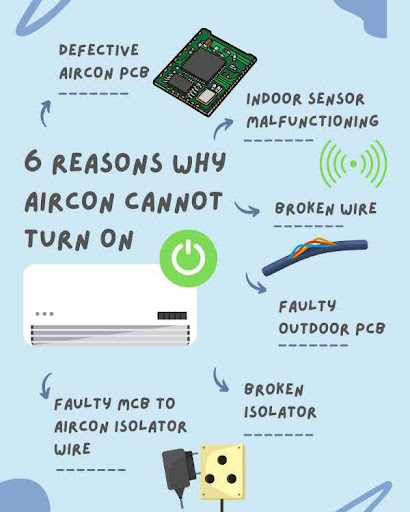
Routine troubleshooting for air conditioners automatically turning off or cannot turn on involves checking for a possible malfunction of the isolator switch. Alternatively, the wiring connection between the condenser to the isolator is damaged, cut, or loose.
In case of an aircon that won’t and cannot turn on (often coupled with the lack of blinking lights on the aircon indicator lamp), always inspect the isolator switch and its associated wiring first. If the problem is in the wiring connection between the isolator and the MCB (Miniature Circuit Breaker) inside the DB box, the wiring system might be within the walls and an expensive fix may be required. Unlike an isolator switch, an MCB is designed to automatically trip during a short circuit to effectively protect the devices connected to its circuit. The MCB automatically switches off when there is a power spike or an overload of the capacity to which the MCB has been rated to handle.
Where Can You Buy an Aircon Isolator To Replace a Defective One
In Singapore, aircon isolator switches are readily available from various suppliers, both online and in physical stores. Home improvement centers also sell standard aircon isolators. Additionally, electrical supply stores provide a range of isolator switches suited for different air conditioning models. Online platforms offer convenient options for purchasing isolator switches with delivery services, as well. But the safest buying route is to get these devices from local air conditioning service companies that sell and install isolator switches as part of their aircon maintenance and repair services.
When purchasing an aircon isolator switch, make sure that it matches the specifications and power rating of your existing air conditioning unit. If unsure, consult with a professional electrician or aircon technician to avoid compatibility issues.


