


Aircon Insulation: A Comprehensive Guide to Installation, Selection, and Maintenance

Aircon Insulation in Singapore
Are you considering aircon insulation in Singapore? What is the cost of aircon insulation? Discover more about aircon insulation in Singapore on this page. Here’s what we’ll cover:
The subject of ‘aircon insulation’ is highly relevant in Singapore, where almost 99 percent of residences have air conditioning systems and where proper aircon insulation is part and parcel of optimal performance and energy efficiency. Insulation not only helps in maintaining the desired temperature but also reduces energy consumption and minimizes wear and tear on the air conditioning unit. This article will discuss the importance of aircon insulation, covering installation, proper selection, maintenance, specific aircon-insulation-related considerations for HDB flats, and more.

There are several types of aircon insulation used in Singapore, each serving specific purposes and suited to different parts of the air conditioning system. The types of aircon insulation used depend on the specific application, whether it’s for pipes, ducts, AHUs, or outdoor units. Rubber foam, fiberglass, elastomeric foam, and vapor barriers are among the most commonly used materials. Below is a detailed explanation of the different types of aircon insulation, as well as a table that summarizes the key points:
| Aircon Insulation Type | Purpose | Materials Used |
|---|---|---|
| Pipe insulation (refrigerant line insulation) | Pipe insulation covers the refrigerant lines that connect the indoor and outdoor units of an air conditioning system. It prevents heat gain or loss, reduces condensation, and minimizes energy waste. | Rubber foam or polyethylene (PE) foam |
| Duct insulation | Duct insulation is used in central air conditioning systems to insulate the air ducts that distribute cooled air throughout a building. It helps maintain the temperature of the air as it travels through the ducts, reducing energy loss and preventing condensation. | Fiberglass insulation or flexible elastomeric foam |
| Insulation for Air Handling Units (AHUs) and Fan Coil Units (FCUs) | AHUs and FCUs are critical components of HVAC systems, and insulating them helps reduce heat transfer, noise, and condensation. | Fiberglass panels or phenolic foam |
| Insulation for chilled water pipes | In large commercial or industrial air conditioning systems, chilled water pipes are used to transport cold water for cooling. Insulating these pipes is essential to prevent heat gain and maintain the efficiency of the system. | Closed-cell elastomeric foam or polyurethane foam (PUF) |
| Vapor barrier insulation | This prevents moisture from penetrating the insulation and causing condensation, which can lead to mold growth and reduced insulation effectiveness. | Aluminum foil or polyethylene sheets |
| Acoustic insulation | Acoustic insulation helps reduce noise levels, ensuring a quieter indoor environment. | Mineral wool or acoustic foam |
| Insulation for outdoor units | This insulation protects the outdoor unit from extreme heat, rain, and debris. | Weatherproof covers and UV-resistant foam |
Pipe Insulation (Refrigerant Line Insulation)
Pipe insulation is used to cover the refrigerant lines (suction and discharge pipes) that connect the indoor and outdoor units of an air conditioning system. It prevents heat gain or loss, reduces aircon condensation, and minimizes energy waste. Its thickness typically ranges from 6mm to 25mm, depending on the pipe size and insulation requirements. Rubber foam and polyethylene foam (PE foam) are the preferred materials for aircon pipe insulation. Rubber foam insulation is the most common type of insulation used for refrigerant pipes because it is flexible, easy to install, and has excellent thermal properties. It is also resistant to moisture, which is crucial in Singapore’s humid climate. PE foam, on the other hand, is a lightweight and durable option for insulating smaller pipes. It is resistant to UV rays and chemicals, making it suitable for outdoor applications.

Duct Insulation
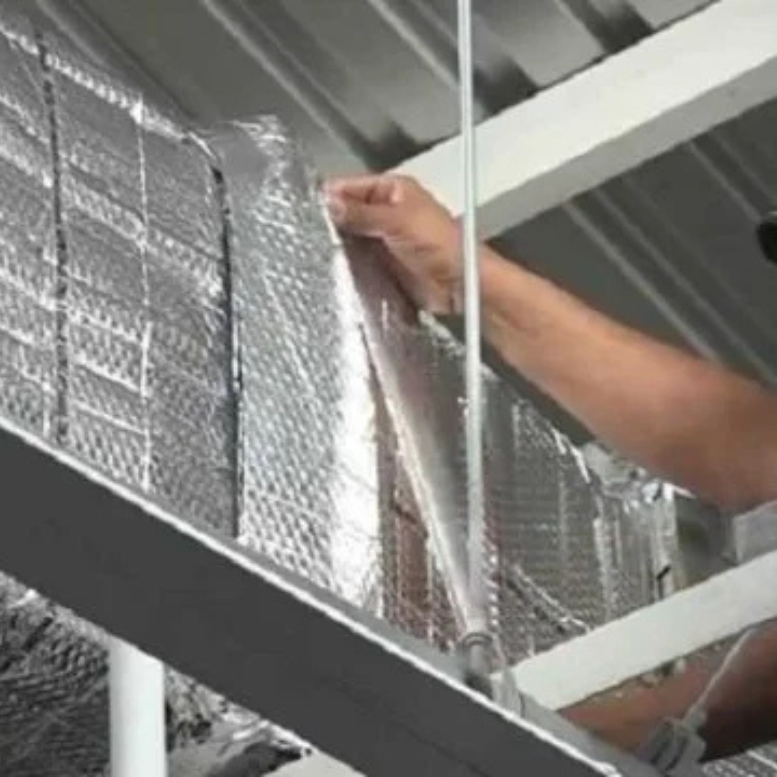
Duct insulation is used in central air conditioning systems to insulate the air ducts that distribute cooled air throughout a building. It helps maintain the temperature of the air as it travels through the ducts, reducing energy loss and preventing condensation. Duct insulation is typically installed on the exterior of the ducts, secured with adhesive or tape. And, fiberglass insulation is a popular choice for duct insulation due to its excellent thermal and acoustic properties. It is available in rolls or rigid boards and is often wrapped around ducts. Flexible elastomeric foam, on the other hand, is ideal for insulating ducts in humid environments like Singapore because it is resistant to moisture and mold growth.

Insulation for Air Handling Units (AHUs) and Fan Coil Units (FCUs
AHUs and FCUs are critical components of HVAC systems, and insulating them helps reduce heat transfer, noise, and condensation. The insulation is applied to the internal or external surfaces of the units, depending on the design and requirements. Fiberglass panels are commonly used to insulate the walls of AHUs and FCUs. They provide both thermal and acoustic insulation. Phenolic foam, on the other hand, offers high thermal efficiency and fire resistance so it is suitable for insulating AHUs in commercial buildings.

Insulation for Chilled Water Pipes
In large commercial or industrial air conditioning systems, chilled water pipes are used to transport cold water for cooling. Insulating these pipes is essential to prevent heat gain and maintain the efficiency of the system. The thickness of the insulation normally depends on the pipe diameter and the temperature of the chilled water. The materials used to insulate chilled water pipes are either made up of closed-cell elastomeric foam or polyurethane foam (PUF). Closed-cell elastomeric foam is highly effective for insulating chilled water pipes due to its low thermal conductivity and resistance to moisture. Similarly, PUF offers high thermal efficiency and durability and is an excellent insulator for chilled water pipes.

Vapor Barrier Insulation
In Singapore’s humid climate, vapor barriers are essential to prevent moisture from penetrating the insulation and causing condensation, which can lead to mold growth and reduced insulation effectiveness. Vapor barriers are typically applied as an outer layer over the primary insulation material. Because aluminum foil reflects heat and blocks moisture, it is often used as a vapor barrier in conjunction with other insulation materials. Polyethylene sheets are also used as vapor barriers, especially in duct insulation and pipe insulation.

Acoustic Insulation
Air conditioning systems can generate noise, especially in commercial or residential buildings. To help reduce aircon noise levels, acoustic insulation is applied. Acoustic insulation is typically installed in walls, ceilings, or around noisy components of the air conditioning system. Mineral wool and acoustic foam are the preferred materials for acoustic insulation. Mineral wool is excellent for soundproofing and is often used in AHUs and ductwork, while acoustic foam tends to be used in areas where noise reduction is a priority, such as near aircon compressors or indoor units.
Insulation for Outdoor Units
While outdoor units are designed to withstand weather conditions, additional insulation can protect them from extreme heat, rain, and debris, improving their longevity and efficiency. Weatherproof covers, which are not traditional insulation, offer basic protection against environmental factors. Meanwhile, UV-resistant foam can be used to insulate exposed pipes or components of the outdoor unit.

EXPLORE OUR SERVICES
Click to find out
The Singapore Civil Defence Force (SCDF) plays a critical role in ensuring public safety, fire prevention, and emergency response. As part of its commitment to operational efficiency and safety, the SCDF has established stringent requirements for air conditioning insulation. These requirements are designed to enhance energy efficiency, maintain optimal indoor conditions, and ensure compliance with fire safety standards.
Air conditioning is the process of treating air so as to control simultaneously its temperature, humidity, cleanliness and distribution to meet the requirements of the conditioned space.”
The use of air conditioning and mechanical ventilation systems will invariably, except for self-contained split units, involve some use of pipe works and ducts for air distribution and removal.
The use of ducts present the inherent possibility of spreading fire, heat, gases and smoke throughout the building or the floors/areas served.
Where air conditioning system is designed to operate during fire emergency, it is to be emphasized that the system shall comply with all the relevant requirements for the mechanical ventilation system in this Code.
(b) Ducts for air-conditioning and mechanical ventilation systems shall be constructed in compliance with the following requirements:
(i) All air-conditioning or other ventilation ducts including framing thereof, shall be constructed of steel, aluminium, glass-fibre batt or mineral-wool batt or other approved material.
(ii) All air-conditioning or other ventilation ducts shall be adequately supported
Source: Singapore Civil Defence Force handbook (from Chapter 7: Mechanical Ventilation and Smoke Control Systems)
Key Objectives of SCDF Aircon Insulation Requirements
✔️Energy Efficiency. Aircon systems are significant energy consumers especially in SCDF facilities. Proper insulation of aircon ducts and piping minimizes thermal losses, ensuring that cooled air reaches its destination without unnecessary energy wastage. This aligns with Singapore’s national sustainability goals and reduces operational costs.
✔️Fire Safety. Given the SCDF’s focus on fire safety, aircon insulation materials must meet strict fire-resistant standards. Insulation materials must be non-combustible or have low flame-spread properties to prevent the spread of fire and smoke in emergency situations
✔️Condensation Control. In Singapore’s humid climate, condensation on aircon ducts and piping can lead to moisture buildup, mold growth, and structural damage. Proper insulation prevents condensation, ensuring the longevity of the system and maintaining indoor air quality.
✔️Noise Reduction. Aircon systems can generate noise. Insulation helps dampen sound, creating a quieter and more conducive environment.
Specific SCDF Requirements on Aircon Insulation
The SCDF mandates the use of insulation materials that comply with the following standards:
🔖Fire Resistance. Insulation materials must adhere to the Singapore Standard SS 476, which specifies fire resistance requirements. Materials should have a high fire resistance rating and low smoke emission.
🔖Thermal Performance. Insulation must have a high thermal resistance (R-value) to minimize heat transfer and ensure energy efficiency.
🔖Durability. Materials must be resistant to wear, tear, and environmental factors, ensuring long-term performance.
🔖Non-Toxic and Low VOC. Insulation materials should not emit harmful volatile organic compounds (VOCs) that could compromise indoor air quality.
🔖Professional Installation and Maintenance. The SCDF emphasizes proper installation and regular maintenance of aircon insulation to ensure its effectiveness. Insulation must be installed by certified professionals to ensure compliance with SCDF standards. Routine checks are also required to identify and address any damage or wear to the insulation. Lastly, proper records of insulation materials, installation, and maintenance must be maintained for accountability and future reference.
Factors To Consider When Choosing Aircon Insulation in Singapore
Choosing the right insulation material is critical for the efficiency and longevity of your air conditioning system. Here are some factors to consider when selecting aircon insulation:
✔️Thermal Resistance (R-Value). The R-value measures the insulation material’s ability to resist heat flow. Higher R-values indicate better insulation properties. Choose a material with an appropriate R-value for your climate and aircon system. Singapore’s high humidity and temperature require insulation materials that are moisture-resistant and have high thermal efficiency.
✔️Material Durability. Consider the durability of the insulation material. It should be able to withstand temperature fluctuations, moisture, and wear over time. Foam rubber and polyethylene are known for their durability and resistance to environmental factors.
✔️Ease of Installation. Some insulation materials are easier to install than others. Pre-slit foam tubes, for example, are designed for quick and easy installation around aircon pipes. Consider the complexity of your installation when selecting the material.
✔️Fire Resistance. Safety is paramount when selecting insulation materials. Choose materials that are fire-resistant and comply with local safety standards. This is especially important in residential buildings like HDB flats.
✔️Cost. While cost should not be the sole determining factor, it’s important to choose an insulation material that fits within your budget. Balance cost with the material’s performance and durability to ensure long-term savings.
OUR TESTIMONIALS


Installation of Aircon Insulation
Proper installation of aircon insulation is vital to ensure that your air conditioning system operates efficiently. Here are the key steps involved in the installation process:
- Assessing the area. Before installing insulation, assess the area where the aircon pipes are located. Identify any gaps, cracks, or areas where heat exchange might occur. This will help in determining the type and amount of insulation required.
- Choosing the right insulation material. Common materials include foam rubber, fiberglass, and polyethylene. And, each material has its own pros and cons when it comes to thermal resistance, durability, and ease of installation.
- Measuring and cutting. Measure the length of the aircon pipes and cut the insulation material accordingly. Make sure that the insulation fits snugly around the pipes without any gaps.
- Applying the insulation. Wrap the insulation material around the aircon pipes. Always, insulate to cover the entire length. Use adhesive or tape to secure the insulation in place. For areas that are hard to reach, use pre-slit insulation for easier application.
- Sealing joints and gaps. After applying the insulation, seal any joints or gaps with tape or adhesive to prevent air leakage. This will ensure that the insulation is effective in maintaining the desired temperature.
- Professional installation. While DIY installation is possible, it’s often best to hire a professional. Professionals have the expertise and tools to handle complex installations, especially in hard-to-reach areas.
Maintenance of Aircon Insulation
Regular maintenance of aircon insulation is essential to ensure its effectiveness and prolong the life of your air conditioning system. Here are some maintenance tips:
🔖Regular Inspections. Inspect the insulation periodically for signs of wear, tear, or damage. Look for cracks, gaps, or areas where the insulation may have come loose. Then promptly address any issues to maintain the insulation’s effectiveness.
🔖Cleaning. Dust and debris can accumulate on the insulation over time, reducing its efficiency. So, clean the insulation regularly using a damp cloth or a vacuum cleaner with a soft brush attachment. Also, avoid using harsh chemicals that could damage the material.
🔖Replacing Damaged Insulation. If you notice any significant damage to the insulation, such as cracks or tears, it’s important to replace it as soon as possible. Damaged insulation can lead to energy loss and reduced efficiency of your aircon system.
🔖Sealing Leaks. Over time, the adhesive or tape used to secure the insulation may wear out, leading to air leaks. Re-seal any joints or gaps to ensure that the insulation remains effective.
🔖Professional Maintenance. Consider scheduling regular maintenance with a professional aircon service provider. They can inspect, clean, and repair the insulation as needed, ensuring that your aircon system operates at peak efficiency.


Aircon Insulation in HDB Flats
HDB flats in Singapore present unique challenges when it comes to aircon insulation. Meanwhile, here are some important aircon-insulation-related considerations specific to HDB flats:
🔖Space Constraints. HDB flats often have limited space. Hence, it is a challenge to install and maintain aircon insulation. Choose insulation materials that are easy to install in tight spaces, such as pre-slit foam tubes
🔖Noise Reduction. In addition to thermal insulation, consider materials that offer soundproofing properties. This helps reduce the noise generated by the aircon unit, which is especially important in densely populated HDB estates.
🔖Compliance with HDB Regulations. Ensure that the insulation materials and installation methods comply with HDB regulations. For example, steer clear of some materials flagged due to fire safety concerns. And, always check with the relevant authorities before proceeding with the installation.
🔖Energy Efficiency. Given the high cost of electricity, try to prioritize energy efficiency. Proper insulation ssignificantly reduces energy consumption, leading to lower utility bills. So, choose materials with high R-values to maximize energy savings.
🔖Professional Installation in HDB Flats. Due to the unique challenges of HDB flats, it’s often best to hire a professional to install insulation. Professionals know HDB regulations and can ensure that the insulation material is installed correctly and safely.


